
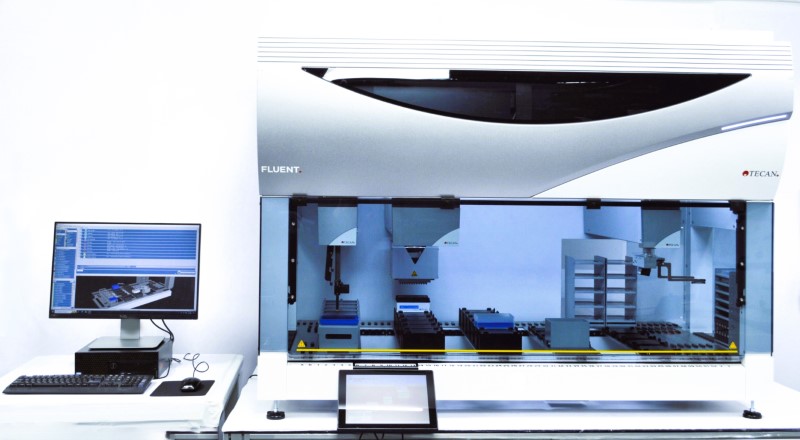
Automated liquid handling systems are essential tools in high-throughput laboratories, particularly in pharmaceutical and biotechnology research, due to their ability to streamline processes and ensure reproducibility. “Liquid class” is one of the fundamental concepts within these systems. Understanding the role of liquid classes in liquid handling systems is crucial for optimizing the transfer of various liquids in the lab.
What is a Liquid Class?
A liquid class is essential in automated liquid handling systems, ensuring accurate liquid transfer in laboratories. It defines a liquid's physical properties and translates them into mechanical behaviors for pipetting systems. Unlike traditional pipettes, which rely on visual feedback, automated systems need precise programming to ensure consistent results. A liquid class consists of predefined parameters corresponding to the liquid’s characteristics, guiding the system’s actions, such as aspiration speed and dispensing timing. Properly defining these parameters ensures optimal handling of different liquids.
Key properties, such as viscosity, surface tension, density, adhesion, cohesion, vapor pressure, and capillary action, influence how liquids behave during pipetting (Gollapudi, 2024). For example, viscosity affects flow and aspiration speed, while surface tension impacts how liquid interacts with the pipette. Other factors, such as adhesion and cohesion, influence liquid movement and surface interactions. For volatile solvents, vapor pressure is especially important. These properties must be considered to ensure precise transfers.
Automated systems often include predefined liquid classes for commonly used liquids, offering a starting point for customization. While these are sufficient for routine assays, custom liquid classes may be necessary for liquids with unique properties. Developing a new liquid class ensures maximum efficiency and accuracy when predefined settings are inadequate.
When selecting or creating a liquid class, the liquid’s characteristics must be reflected in the system’s settings. For example, creating a liquid class for a Master Mix in PCR might start with an aqueous class, but adjustments are needed to account for the mixture's specific composition and behavior. Building on existing classes saves time and ensures accuracy (Hamilton Company, 2019).
Automated Liquid Handling Mechanisms
Labs automate liquid handling using three main mechanical approaches for processes like sample preparation, PCR setup, DNA extraction, and high-throughput screening. Each process requires specific handling based on the liquid's properties and the precision needed.
Displacement Pipetting
Displacement pipetting is the most common automated method and functions similarly to manual pipetting, but provides better precision and control. It has two forms: air displacement and positive displacement. Air displacement creates a vacuum using a piston above the liquid, controlling factors like aspiration and dispensing speeds, piston movement, and tip immersion depth.
For example, aspiration speed is reduced by up to 80 percent for viscous liquids like glycerol to prevent air bubble formation (Schuster, 2024). Positive displacement, where the piston comes into direct contact with the liquid, is better suited for volatile, viscous, or non-aqueous liquids. In this system, the dispensing speed is adjusted for accurate transfer, especially with smaller volumes of viscous samples.
Acoustic Transfer
Acoustic transfer uses sound waves to move liquid drops without direct sample contact. Finely tuned acoustic pulses are emitted, pushing liquid drops to their destination. Acoustic transfer allows for volumes as small as 2.5 nanoliters and ensures zero cross-contamination (Sangouard, 2021).
This method works well with dimethyl sulfoxide (DMSO) solutions used in compound libraries, but struggles with highly viscous or complex samples. Since this method doesn’t involve contact with the liquid, it is ideal for precious samples where minimizing loss is crucial. Acoustic systems require fine-tuning for each liquid to determine the appropriate energy for drop ejection based on the liquid’s properties, such as surface tension and viscosity.
Peristaltic Pump
Peristaltic pumps use flexible tubing and rollers to move liquid through the system. The rollers squeeze the tubing, creating a vacuum that causes the liquid to move forward. This approach is advantageous for continuous flow applications, handling corrosive chemicals, and processes involving cell suspensions. Peristaltic pumps are ideal for high-speed dispensing, especially in microplate applications, where uniform solution delivery is required across all wells (Dreckmann, 2021).
Unlike other methods, peristaltic pumps are less affected by liquid types and offer simpler definitions but still require optimization for different viscosities and careful selection of tubing materials, especially when handling reactive liquids. The choice of method depends on the liquid’s physical properties and the desired outcome.
Types of Liquids
There are unique challenges associated with different liquids. These challenges require specific programming adjustments within liquid classes for accurate transfer. To effectively handle different liquids, it is important to understand how water, solvents, and viscous liquids behave during the transfer process.
Water
Water serves as the baseline for most liquid handling operations due to its predictable flow and viscosity at 1.0 cP. Thus, it is ideal for calibrating automated liquid handlers. Water-based solutions may require adjustments when additives are introduced. For example, buffers with detergents lower surface tension, which can cause dripping if standard water parameters remain unchanged. Once optimized, water-based liquid classes can achieve CV values of less than 1 percent for volumes greater than 5 μL, providing a foundation for custom liquid classes (Torres-Acosta, 2024).
Solvent
Organic solvents, such as DMSO, present more challenges for automated liquid handling systems due to their unique properties. They have lower surface tension, higher vapor pressure, and varying viscosities depending on the solvent. For instance, DMSO has a viscosity 2.2 times higher than water and absorbs moisture quickly, causing droplets to stick to pipette tips. This requires adjustments, such as slower aspiration and dispensing speeds, to prevent turbulence and bubbles from forming.
Volatile solvents like methanol, acetone, and ethanol present additional issues, such as high vapor pressure, which can result in evaporation and volume loss. For accurate transfers, solvent liquid classes need extended delays, larger air gaps, and positive displacement tips when available. These adjustments are particularly critical in drug discovery workflows, where high accuracy is essential at low volumes.
Viscous
Viscous liquids, such as glycerol, present the most significant challenge for automated systems due to their resistance to flow. Glycerol’s viscosity is 1,400 times that of water at room temperature. Viscous liquids, such as polyethylene glycol and oils, present similar issues. These compounds resist aspiration and dispensing, often sticking to pipette tips and forming extended fluid strings.
For these liquids, systems must slow aspiration and dispensing speeds, increase immersion depths, and extend delay times after aspiration and before dispensing. Temperature plays a role, as glycerol’s viscosity decreases significantly at higher temperatures. Positive displacement pipetting mechanisms are more effective than air displacement for these liquids, as they eliminate the compressible air cushion that can cause inaccuracies. With optimized liquid classes, systems can still achieve good precision, maintaining CVs below 5 percent for volumes greater than 20 μL.
Liquid Transfer Functions
The success of lab automation heavily relies on precise liquid transfer functions tailored to specific experimental needs. These functions determine how liquids move between vessels and directly influence accuracy, precision, and workflow efficiency.
Wet Dispenses
Wet dispensing is essential for precise liquid handling, where the tip comes into contact with the liquid or the surface of the vessel. This interaction controls liquid cohesion and adhesion forces, ensuring smoother transfers, especially for challenging solutions. For instance, the system uses a steeper touch-off angle and longer post-dispense wait times for thick solutions, such as glycerol. Key benefits include improved precision with thick liquids that stick to pipette tips, reduced droplet formation, and enhanced accuracy with small volumes (in the sub-microliter range). Wet dispensing also minimizes dead volume in target vessels.
With proper optimization, wet dispensing can reduce the coefficient of variation (CV) by up to 60 percent compared to free dispensing. For optimal results, factors such as touch-off angle, immersion depth, and contact time must be adjusted. This method can lead to cross-contamination when one tip touches multiple vessels, so labs must balance precision with speed.
Free Dispenses
Free dispensing, also known as jet dispensing, allows liquid to shoot out without contact between the tip and the vessel. This method offers faster processing times, less risk of cross-contamination, and efficient distribution to multiple wells. For example, a 96-well plate can be filled up to three times faster than with wet dispensing, making it ideal for high-throughput tasks.
However, free dispensing requires careful adjustments for specific liquids. Thin water-based solutions maintain CVs within 2 percent at volumes above 5 μL, but thicker solutions or volatile solvents like methanol, acetone, and ethanol may require more pressure or fine-tuning to ensure accuracy. In multi-dispense operations, where a single large pull of liquid creates multiple smaller drops, precise backward steps between drops are crucial.
Ultimately, the decision between wet and free dispensing hinges on whether precision or speed is the priority for the task. Many advanced protocols leverage both in different steps for optimal performance.
>
Benefits of Automated Liquid Handlers in Research
Automated liquid handling systems show measurable improvements across multiple research fields. A study published in SLAS Technology demonstrated the importance of liquid handling accuracy in biochemical assays. Researchers found that minor volume delivery adjustments had a significant effect on inhibitor potency (IC50) in both protein binding and enzyme assays (Hentz & Knaide, 2022). Miscalibrated liquid handlers caused notable deviations, emphasizing the need for well-calibrated automated systems to ensure reliable data.
Automation also helps reduce costs and allows for smaller sample sizes without sacrificing data quality. Studies show that automated protocols can reduce reaction volumes up to 50 times, improving efficiency without compromising precision (Holland, 2020). In single-cell research, smaller volumes lead to the detection of more genes and finer genetic details, enhancing data quality and the overall research process.
A study using the Opentrons OT-2 liquid handling robot for RNA extraction and purification showed exceptional consistency (Socea, 2023). The automated protocol achieved an intraclass correlation coefficient of 0.998, with replicates showing one-third the variation of manual methods. This precision further underscores the benefits of automation in achieving high-quality, reproducible results.
Automation is invaluable in clinical research. A study focused on separating extracellular vesicles (EVs) from human body fluids found that automated density-based separation reduced variability in EV recovery (Rens et al., 2021). This method consistently outperformed manual techniques, providing enhanced reliability across samples.
Scientists at Chan Zuckerberg Biohub San Francisco automated single-cell RNA sequencing to map transcriptomics for different model cell types. Their automated system processed 96 samples at once, which was much faster than traditional manual methods that handle fewer samples (Hess, Kohl, & Kotrová, 2020).
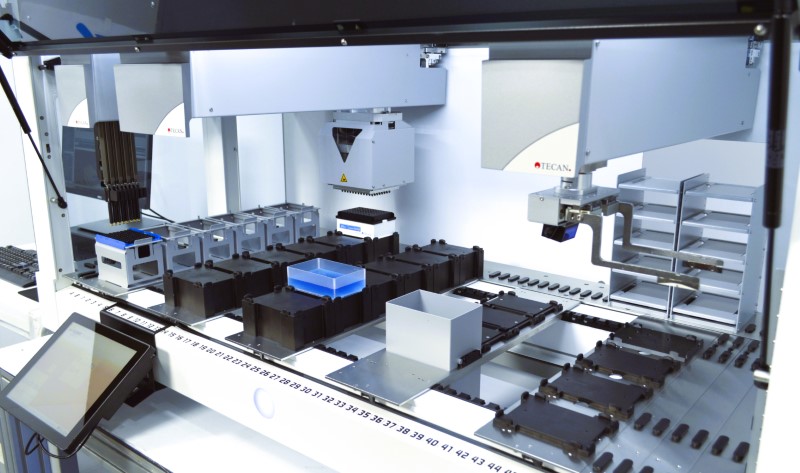
Key advantages of automated liquid handling systems include:
Precision and reproducibility: reduces variation by 60 to 70 percent compared to manual methods (Socea, 2023).
Time efficiency: processes like 96-well plate operations are completed three times faster (Holland, 2020).
Reduced human error: eliminates pipetting mistakes, particularly in repetitive tasks (Rens et al., 2021).
Enhanced standardization: ensures consistent protocol execution, regardless of the operator (Hamilton Company, 2019).
These benefits extend beyond high-throughput screening. For example, the same scientists at Chan Zuckerberg Biohub in San Francisco used automation for RNA extraction, cDNA synthesis, and RT-qPCR, allowing for larger sample batches while maintaining high quality (Hess, Kohl, & Kotrová, 2020). This increased capacity led to successful large-scale compound screening with nontraditional model systems.
At F. Hoffmann-La Roche AG, automation allowed for greater flexibility with complex pipetting protocols (Socea, 2023). The development of two flexible protocols using the OT-2 robot proved affordable for low-throughput assays, making automation accessible for specialized research previously reliant on manual techniques.
Automation in liquid handling is integral to advancing genomics-based target discovery, next-generation sequencing, and personalized medicine, offering a vital tool for accelerating scientific progress (Lippi et al., 2017).
Using a Default Liquid Class vs. Developing Your Own
When choosing between using a default liquid class and developing a custom one, labs must consider their specific needs, the complexity of the liquids, and the precision required. Default liquid classes provide a reliable starting point for common liquids, offering time-saving and operational benefits.
Default liquid classes are pre-programmed by instrument manufacturers and extensively tested for accuracy and consistency with common liquids. These classes allow labs to implement automated protocols quickly, without advanced technical knowledge. They are ideal for projects with time constraints and routine experiments where verified performance and minimal setup are crucial.
While default classes work well for many standard liquids, custom liquid classes are sometimes necessary, for example, research involving proprietary formulations, unique buffer compositions, or non-standard viscosities. Additionally, applications requiring extreme precision, such as those with low coefficients of variation (CV < 1 percent) at challenging volumes, demand more fine-tuning. Labs working with specialized consumables or multi-component mixtures may also need custom liquid classes.
Developing a custom liquid class requires careful evaluation and optimization, often starting with the closest available default class. This saves time while incorporating the necessary fine-tuning. In high-throughput operations, small improvements in accuracy yield substantial benefits. For lower-throughput tasks, default liquid classes are often sufficient. Some modern automated systems offer a middle-ground approach, allowing for small adjustments to default parameters. This enables labs to enhance performance without having to fully develop a new class.
Conclusion
Automated liquid handling systems with well-defined liquid classes have significantly improved lab efficiency and reproducibility. Research and hands-on experience show that successful implementation depends on balancing liquid properties, handling mechanisms, and transfer functions. Selecting the right system is crucial for specific applications. Displacement pipetting is ideal for routine tasks, while acoustic transfer enables contactless handling at the nanoliter volume level. Peristaltic systems excel in continuous flow operations.
Lab teams should align liquid properties with appropriate handling methods. Default parameters are suitable for water-based solutions, but viscous liquids and volatile solvents require specialized strategies. The decision between default and custom liquid classes hinges on experimental needs, liquid characteristics, and precision requirements. Optimized automated systems have been shown to reduce variability by up to 70 percent and triple throughput compared to manual methods (Promega Corporation, 2024). These systems are essential in fields like single-cell genomics, high-throughput screening, and precision medicine.
Scientists who master liquid class principles and their real-world applications can achieve more reliable data, speeding up research progress and improving experimental outcomes.
Boston Industries offers a variety of quality pre-owned liquid handling systems, robotics, and system accessories for a range of applications. For more information, contact us about your laboratory needs and learn about how we can bring value to your research through expertly refurbished equipment.
References
Dreckmann, T. (2021). Low volume aseptic filling of monoclonal antibodies (Doctoral dissertation, University of Basel).
Gollapudi, S. (2024, September 10). Liquid class development. The Automated Lab.
Guan, X. L., Chang, D. P. S., Mok, Z. X., & Lee, B. (2023). Assessing variations in manual pipetting: An under-investigated requirement of good laboratory practice. Journal of Mass Spectrometry and Advances in the Clinical Lab, 30, 25–29.
Hamilton Company. (2019). Liquid handling reference guide (Lit. No. EB-1907-29 v2.0).
Hentz, N. G., & Knaide, T. R. (2022). Effect of liquid-handling accuracy on assay performance. Journal of Laboratory Automation, 18(6), 452–459.
Hess, J. F., Kohl, T. A., Kotrová, M., Rönsch, K., Paprotka, T., Mohr, V., ... & Paust, N. (2020). Library preparation for next generation sequencing: A review of automation strategies. Biotechnology Advances, 41, 107537.
Holland, I., & Davies, J. A. (2020). Automation in the life science research laboratory. Frontiers in Bioengineering and Biotechnology, 8, 571777.
Lippi, G., Lima-Oliveira, G., Brocco, G., Bassi, A., & Salvagno, G. L. (2017). Estimating the intra-and inter-individual imprecision of manual pipetting. Clinical Chemistry and Laboratory Medicine (CCLM), 55(7), 962–966.
Petersen, J., & Nguyen, J. (2005). Comparison of absorbance and fluorescence methods for determining liquid dispensing precision. JALA: Journal of the Association for Laboratory Automation, 10(2), 82–87.
Rens, C., Shapira, T., Peña-Diaz, S., Chao, J. D., Pfeifer, T., & Av-Gay, Y. (2021). Apoptosis assessment in high-content and high-throughput screening assays. Biotechniques, 70(6), 309–318.
Sangouard, G., Zorzi, A., Wu, Y., Ehret, E., Schüttel, M., Kale, S., ... & Heinis, C. (2021). Picomole‐scale synthesis and screening of macrocyclic compound libraries by acoustic liquid transfer. Angewandte Chemie, 133(40), 21870–21875.
Schuster, J., Kamuju, V., Zhou, J., & Mathaes, R. (2024). Piston-driven automated liquid handlers. SLAS Technology, 100128.
Socea, J. N., Stone, V. N., Qian, X., Gibbs, P. L., & Levinson, K. J. (2023). Implementing laboratory automation for next-generation sequencing: Benefits and challenges for library preparation. Frontiers in Public Health, 11, 1195581.
Thermo Scientific. (2020). Good laboratory pipetting practice.
Torres-Acosta, M. A., Olivares-Molina, A., Kent, R., Leitão, N., Gershater, M., Parker, B., ... & Dikicioglu, D. (2024). Practical deployment of automation to expedite aqueous two-phase extraction. Journal of Biotechnology, 387, 32–43.
Worthington, R. T. (1989). Capacitive liquid level sensing and touch control system (U.S. Patent No. 4,875,498). U.S. Patent and Trademark Office.